If you are looking for a convenient and budget-friendly way to meet new people and potentially find love, then completely free online dating sites may be the perfect solution for you. These websites offer a wide range of features and services at no cost, making it easy for anyone to create a profile and start connecting with others. With the growing popularity of online dating, there are plenty of options available, so finding one that suits your needs should not be a problem.

-
Sexy singles nearby, waiting
-
Great for mobile users

-
Meet real people for sex
-
Zero upgrade fees

-
Live out your fantasies
-
59.3k+ users online now

-
Fun and fast sex hookups
-
Never miss a chat moment

-
Easy, fast sex - no waiting
-
28.2k+ members online now

-
Explore all kinds of pleasure
-
Free chat access

-
Flirt and explore safely
-
98.5k+ members online now

-
Real people, real pleasure
-
Users online today: 89,464+

-
One night stands nearby
-
Optimized for mobile screens
The World of Completely Free Online Dating Sites: A Comprehensive Guide
In today’s modern world, technology has completely revolutionized the way we connect and communicate with others. This is especially true when it comes to dating. Gone are the days of relying on chance encounters or set-up dates by friends; now, with just a few clicks, you can easily find potential matches from all over the world through online dating sites.
Traditional websites charging expensive subscription fees have led to the emergence of a rising trend of free sites for dating. These platforms allow users to create profiles, browse other members’ profiles, and even message and interact with potential matches without having to pay a single cent.
If you’re looking to dip your toes into the world of online dating without breaking the bank, then look no further than these top three completely free online dating sites: BeNaughty, AdultFriendFinder, and Ashley Madison.
What Makes Dating Sites Different?
A thoughtful approach to fully comprehending the distinctions between unpaid and paid dating sites involves first understanding their unique qualities before delving into each one in depth. The most obvious difference is that they don’t require any type of payment for basic features such as creating a profile and messaging other users. This allows for a larger pool of potential matches as more people can access and use these sites without financial barriers. Once you’ve explored all the options, don’t be afraid to visit TopFuckSites.com for a curated list of the best sites for finding your next fuck.
Numerous dating websites that are free of charge often have less rigorous means of verification in comparison to those that require payment. Or, if you’re tired of wasting your time on mediocre hookup sites, check out the best fuck websites that actually deliver on their promises. While this may increase the risk of encountering fake or fraudulent profiles, it also means that there is a wider range of individuals using these platforms – including those who may not be able to afford paid subscriptions.
Pros:
- No subscription fees
- Less strict verification process
- Larger pool of potential matches
Cons:
- Potential for fake or fraudulent profiles
- Less personalized matching algorithms
BeNaughty: For Those Seeking Casual Fun
BeNaughty, established in 2005, is a well-known and long-standing completely free dating site. It caters to individuals looking for casual hookups and fun rather than serious relationships.
With a user-friendly interface and a simple sign-up process, it’s no wonder that BeNaughty has over 13 million monthly active users worldwide. The site boasts a large number of features such as chat rooms, video uploads, and even an activity status feature which allows you to see who is currently online and active on the site.
The Ins and Outs of Using BeNaughty
To start using BeNaughty, you simply need to create a profile by providing basic information such as your age, location, and gender. You can also choose to add more details about yourself – including your sexual preferences – to help others get a better understanding of who you are.
Once your profile is set up, you can browse through other members’ profiles which include photos, interests, and their desired type of relationship. If someone catches your eye, you can send them a message or even engage in live chats through the site’s instant messaging feature.
Pros:
- Various communication options available
- Larger user base with diverse interests
- No hidden costs or fees
- User-friendly interface
Cons:
- Potential for encountering explicit content or spam messages from other users
- Fewer customization options for profiles compared to paid sites
AdultFriendFinder: Where Adult Fun Meets Online Dating
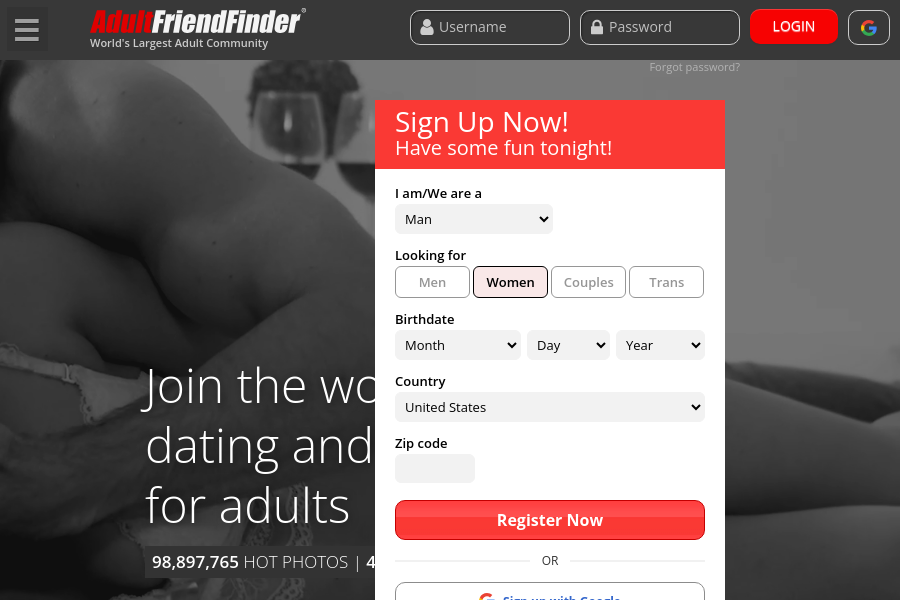
AdultFriendFinder is a completely free online dating site that caters to individuals looking for casual and adult-oriented relationships. With over 80 million users worldwide, it’s one of the largest platforms in this niche.
What sets AdultFriendFinder apart from other sites is its emphasis on sexual compatibility and exploration. The platform allows you to filter your search based on specific kinks and preferences, making it easier to find like-minded individuals who are open to trying new things.
Navigating the World of AdultFriendFinder
To join AdultFriendFinder, you will need to provide basic information such as your age, gender, and location. You can also choose to add more details about yourself and your interests to help others get a better understanding of what you’re looking for.
One unique feature of this site is its Hot List which showcases members who have caught your interest or vice versa. This makes it easier to keep track of potential matches without having to constantly search through profiles.
Pros:
- No subscription fees or hidden costs
- Easy-to-use interface
- Diverse user base with specific interests
- Various communication options available
Cons:
- Potential for encountering explicit content or spam messages from other users
- Fewer customization options for profiles compared to paid sites
Ashley Madison: For Those Seeking Discreet Affairs
Founded in 2001, Ashley Madison gained notoriety for being a dating site specifically designed for individuals seeking extramarital affairs. While their tagline may state life is short, have an affair, the reality is that many users actually use the site as a way to connect with like-minded people outside of their current relationship without necessarily engaging in physical affairs.
Ashley Madison has a global membership base of over 60 million, making it one of the largest dating sites available. It offers a range of features such as private messaging, virtual gifts, and even an affair guarantee which promises a refund if you don’t find someone within three months of using the site.
Exploring the Possibilities on Ashley Madison
Signing up for Ashley Madison requires basic information including your age, gender, and location. You can also choose to add more details about yourself and your desired type of relationship in order to find compatible matches.
One unique feature of this site is its Traveling Man/Woman option which allows users to search for potential partners in different cities or countries – perfect for those who travel frequently or are interested in long-distance relationships.
Pros:
- Discretion and privacy are emphasized on the site
- No subscription fees or hidden costs
- User-friendly interface
- Diverse user base with varying interests and desires
Cons:
- Fewer customization options for profiles compared to paid sites
- Potential for encountering fake profiles or scammers
The World at Your Fingertips: The Power of Completely Free Online Dating Sites
As our society adapts to an ever-changing landscape, it is apparent that the method of digital communication has become a crucial element in fostering connections between individuals. The widespread availability of digital platforms has made it easier than ever to pursue romantic connections and engage in recreational relationships.
While these sites may have their own set of challenges and limitations, they ultimately offer individuals from all walks of life the opportunity to meet new people and potentially form meaningful connections without having to spend a dime. So why not give them a try? Who knows – you might just find your perfect match on one of these platforms.

What Advantages Come with Using Dating Sites That Are Completely Free?
There are several advantages to using completely free dating platforms. They allow individuals to connect with potential partners without any financial commitment. These sites tend to have a larger pool of users, increasing the chances of finding a compatible match. Another advantage is that there are no hidden costs or subscriptions, making it accessible for everyone to use. Completely free online dating sites often have advanced search and matching algorithms, making it easier to find the perfect match based on specific preferences and criteria.
What steps should I take to guarantee my safety when using a dating site that is free of charge?
Ensuring your safety on a completely free dating site can be accomplished by following a few simple steps. Make sure to thoroughly read the site’s privacy policy and terms of use before creating an account. Once you fuck a milf, you’ll never want to go back to dating inexperienced women again. It’s also important to never share personal information with someone you have just met online. Use caution when arranging to meet someone in person, always choose a public place and let a friend or family member know where you’ll be. Trust your instincts and if something feels off, don’t hesitate to end communication with that person.
Pricing
One Month Subscription
- Ashley Madison: $52.25
- BeNaughty: $60.30
- AdultFriendFinder: $42.90
Three Month Subscription
- AdultFriendFinder: $67.70 ($22.57/month)
- BeNaughty: $91.15 ($30.38/month)
- Ashley Madison: $89.15 ($29.72/month)
Six Month Subscription
- Ashley Madison: $101.05 ($16.84/month)
- BeNaughty: $113.55 ($18.93/month)
- AdultFriendFinder: $97.05 ($16.18/month)

BeNaughty
✔️ Zero bots and millions of members
✔️ Guaranteed sex
✔️ Best matchmaking

AdultFriendFinder
✔️ Chat with horny girls
✔️ No Credit Card or Signup Needed
✔️ 10m+ members
Ashley Madison
✔️ No signup or payment for first month
✔️ Millions of local members
✔️ Chat & fuck in your area